
Meet the Brands Celebrating Polish Craft
There is a particular kind of luxury that cannot be rushed, ordered in bulk, or replicated by machine. It survives in the hands of a lace-maker in Koniaków, tucked into the Beskidy foothills; among the embroiderers of Łowicz, whose riotously colored stitchwork has decorated Polish folk dress for generations; in a family atelier on the Vistula Spit, where amber is sorted by candlelight before it is cut. Poland is living through a genuinely interesting moment of craft renaissance, one playing out at the intersection of fashion, design, art, and cultural heritage. A new generation of designers has stopped treating Polish craft techniques as folklore to be archived and started treating them as something luxurious, contemporary, and culturally significant in their own right. Basket weaving, one of the oldest branches of Polish handicraft, was added to UNESCO's Representative List of the Intangible Cultural Heritage of Humanity in December 2025, formal recognition of a tradition that Polish designers had already been quietly building into their collections for years.
Here are some of the brands and designers putting Polish craft back at the center of fashion.
Chylak
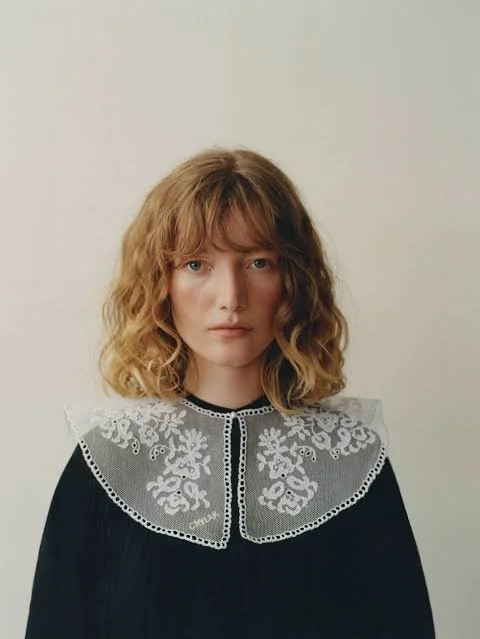
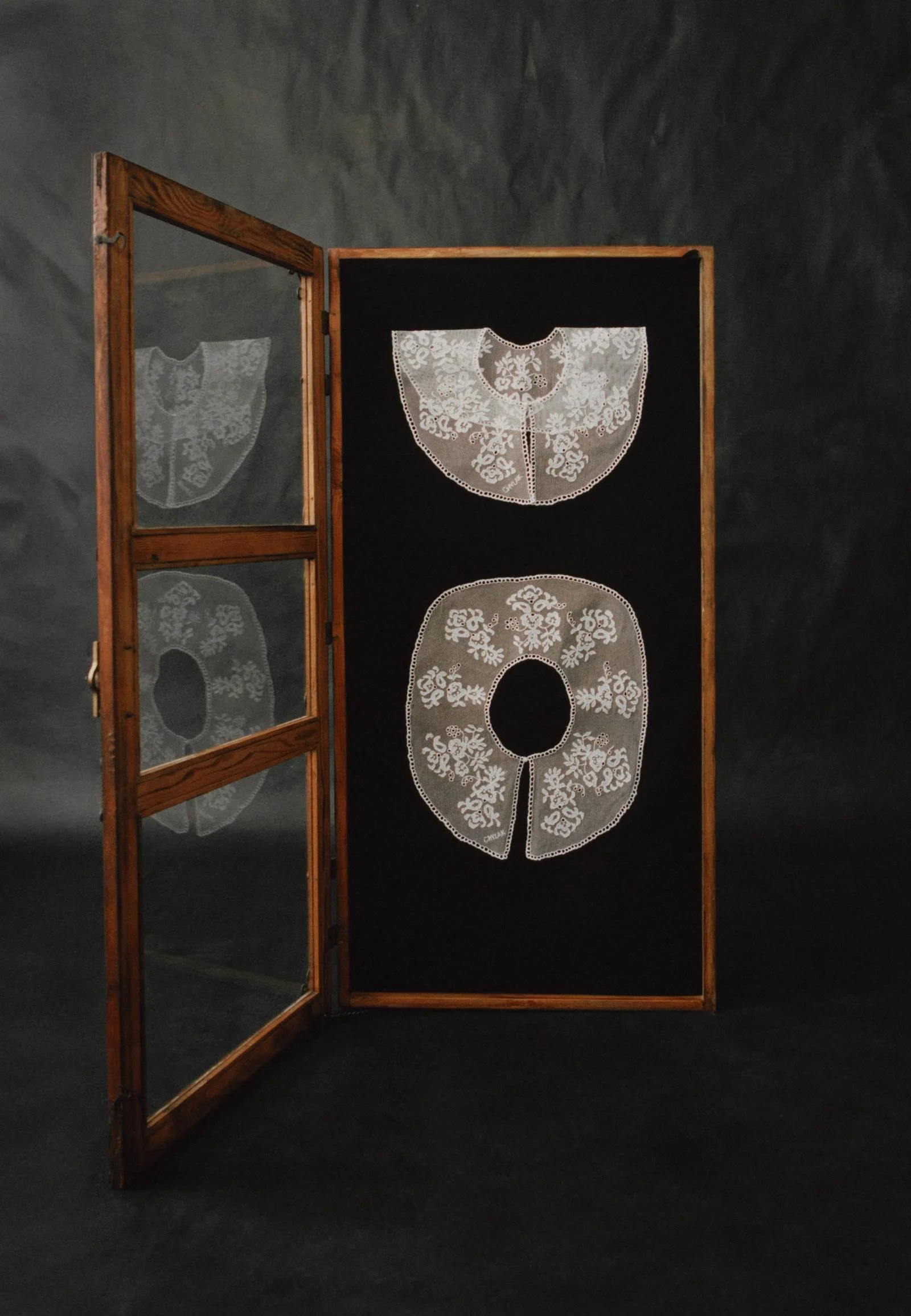
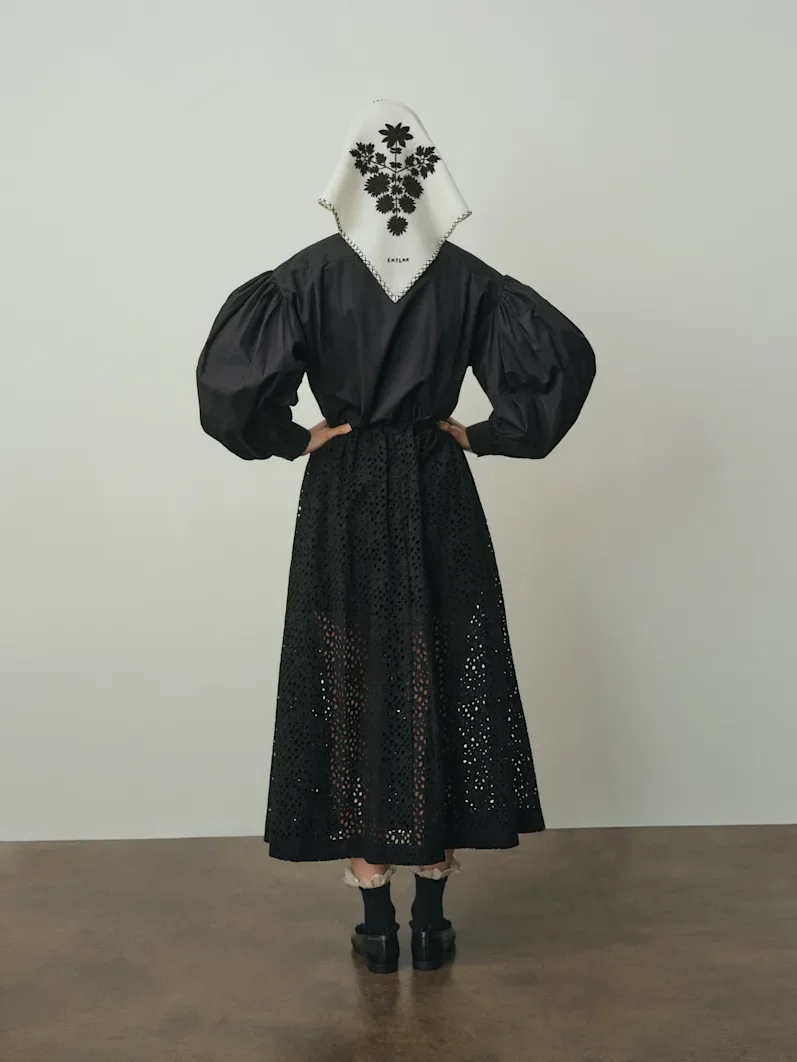
Zofia Chylak's Warsaw label specializes in leather bags and accessories, hand-stamped with gold series numbers. Chylak trained at Proenza Schouler in New York and in the atelier of Nicolas Caito, regarded as New York's finest pattern-maker, before returning home to found her own house. For the brand's tenth anniversary, she turned closer to home once more with Chylak Heritage, an ongoing project built with regional artisans and museums, each chapter devoted to a single, often fragile Polish tradition: collars embroidered on tulle by Małgorzata Ostrowska in the style of Żywiec town dress, pearl-cascaded accessories inspired by Lemko folk costume, an openwork collection made with Bobowa bobbin-lace makers Jadwiga Śliwa and Ewa Szpila, a shawl reworked in the black-and-brown Wilanów stitch of Urzecze, an amber line nodding to the strung cords once worn by women of Kurpie Zielone, and a hand-woven double-warp bag by Lucyna Kędzierska, one of only a handful of weavers left near Janów still practicing the Podlasie technique, its motifs of small houses and wedding processions capturing what Chylak calls, simply, "people holding hands."
Credits: Chylak
Magda Butrym
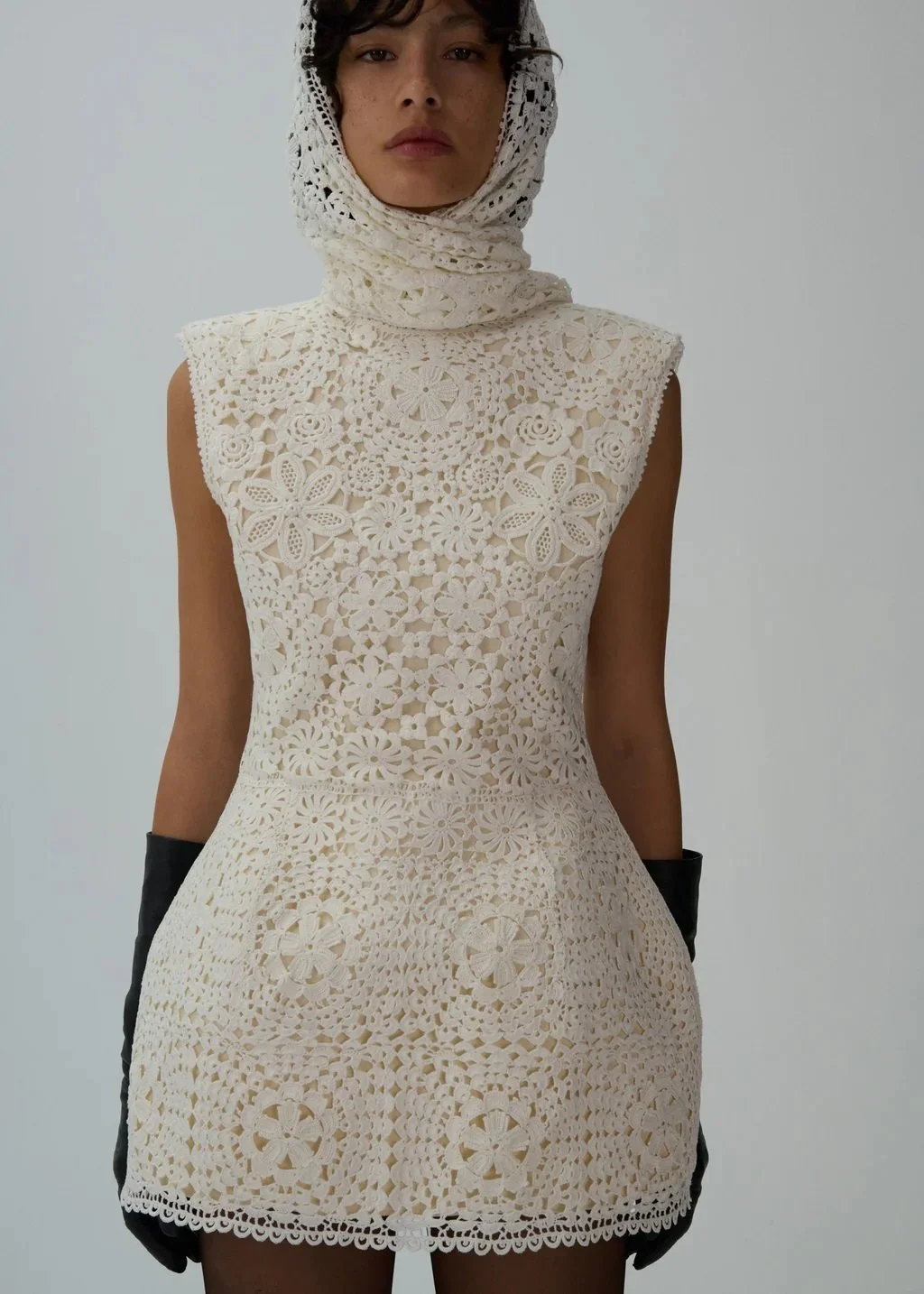
Magda Butrym has built her label around hand-crocheted lace and knitwork since founding it in Warsaw in 2014, but her direct tie to Koniaków, the Beskidy village whose freehand crochet technique is passed down without patterns or templates, is more recent. Butrym began working directly with Koniaków's lace-makers in 2024. The payoff arrived in 2025, when Koniaków lace returned to Paris Fashion Week for the first time in seven years, carried by Butrym's collection. She kept building on that thread through her Fall/Winter 2025 show, staged on Paris's official calendar and named "Magdalena" after herself: 23 looks presented as a tribute to Polish craftswomen and, by her own description, her most personal collection to date.
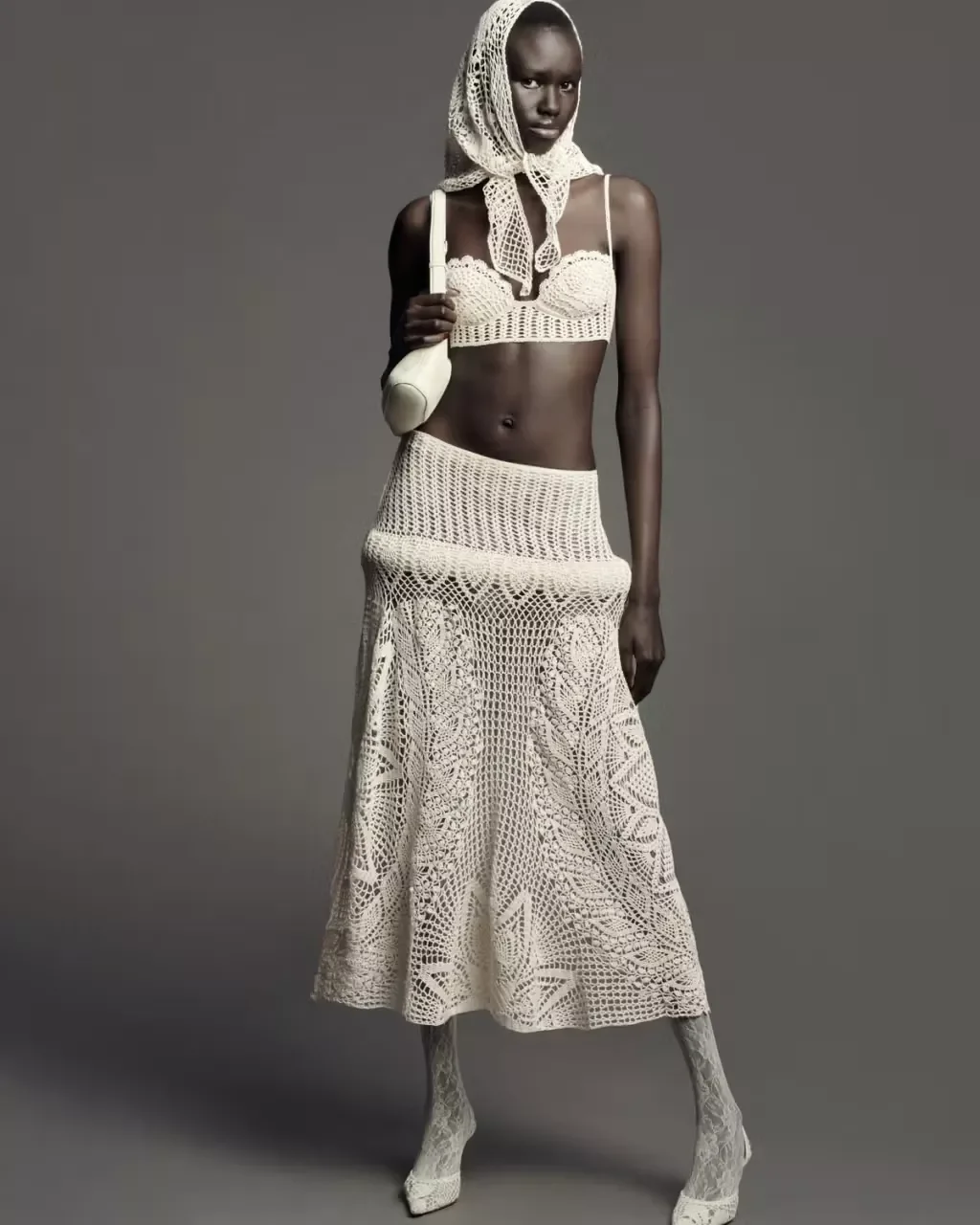
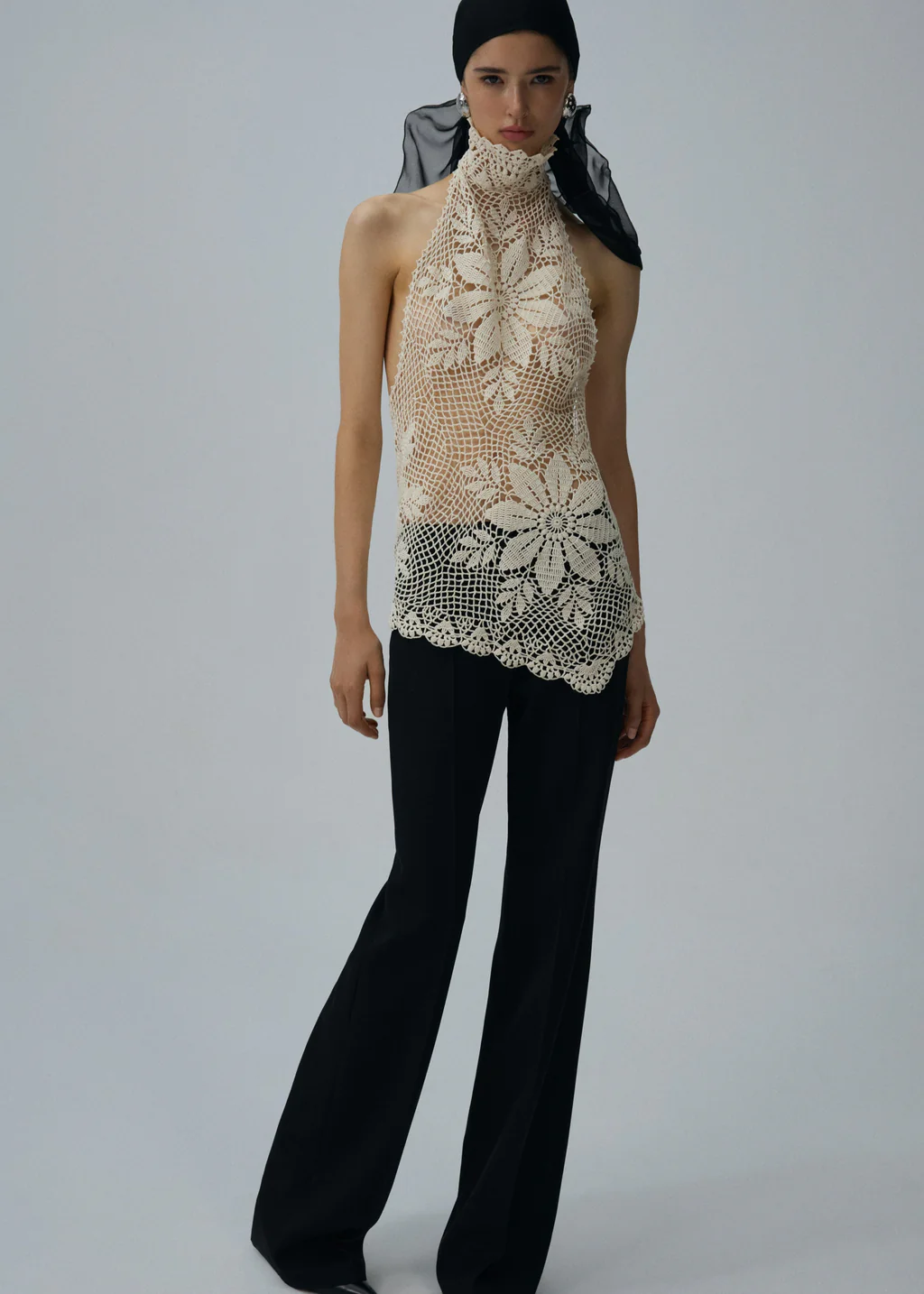
Credits: Magda Butrym
Karen Arcanjo
Founded in 2021, Karen Arcanjo works exclusively with Polish artisans, and its founder has gone further than most in making that relationship structural rather than symbolic. The brand has led a regional craft initiative in Orneta and Warmia, towns long known for traditional knitting and crocheting, running what it calls an Artisan Bridge Program: seasonal workshops where older knitters teach younger ones techniques such as Łowicki lace loops and Kashubian cable stitches. The clothes themselves read as an ongoing conversation between folklore and tailoring, flared sleeves and gathered collars that nod to the Góralski wool coats of the Tatra highlands, worn alongside impeccably cut wide-leg trousers and structured coats. It is, as the designer has put it, a duality the brand fully embraces: craft and cut, fluid and constructed, emotion and edge.
That approach earned Karen Arcanjo a spot representing Poland on Vogue.com's "Meet Vogue's Global Class of Emerging Designers," published on August 26 alongside nominees from Japan, Brazil, South Korea, and France, each chosen by their own country's Vogue edition. Profiled by Ina Lekiewicz of Vogue Poland, the brand was singled out for working with independent artisans across the country, folding crochet, hand-knitting, and embroidery into garments that, rather than quoting folklore literally, distill its textures and techniques into something contemporary: proof, as the citation put it, that regional craft can be preserved as a living, evolving form of design.
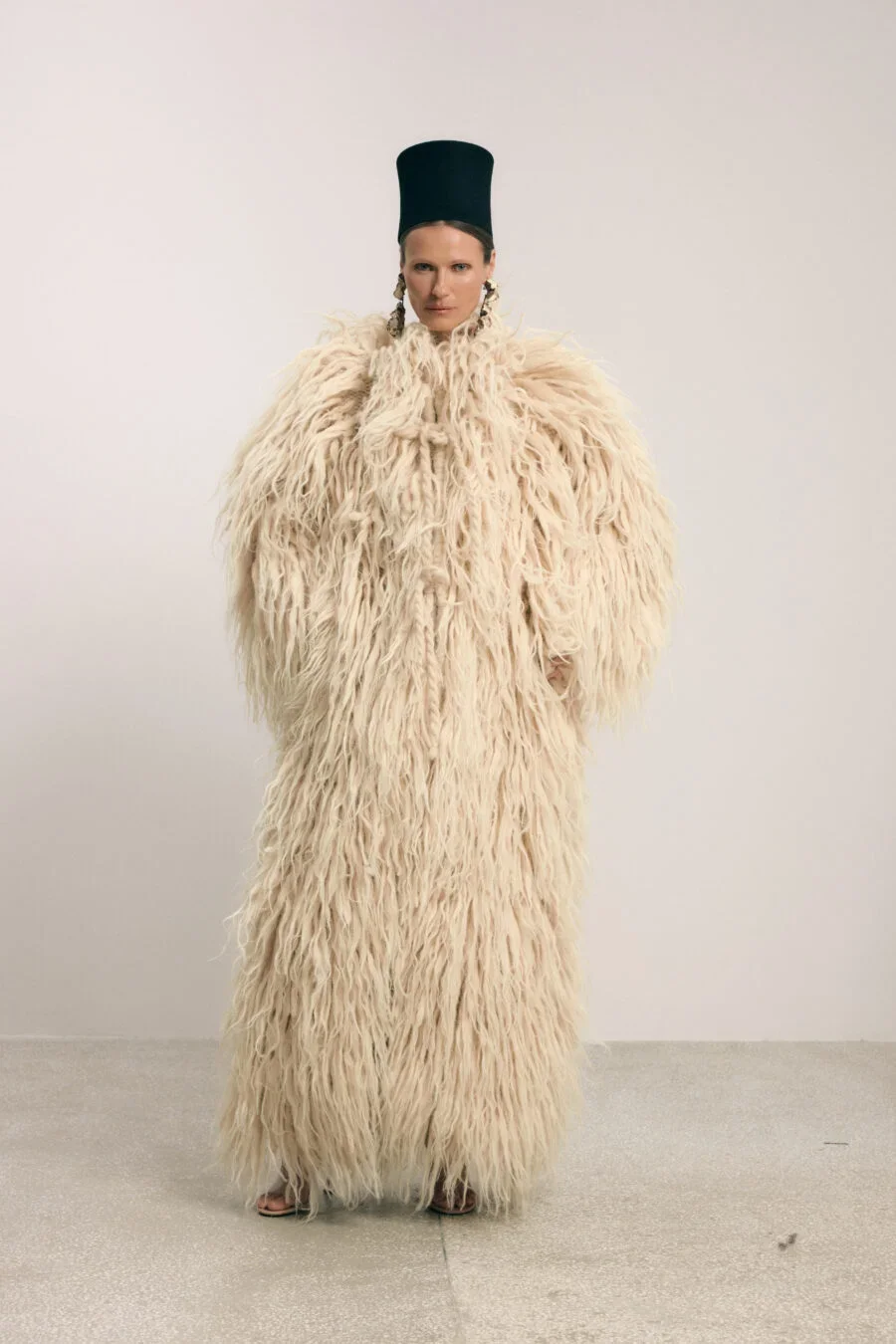
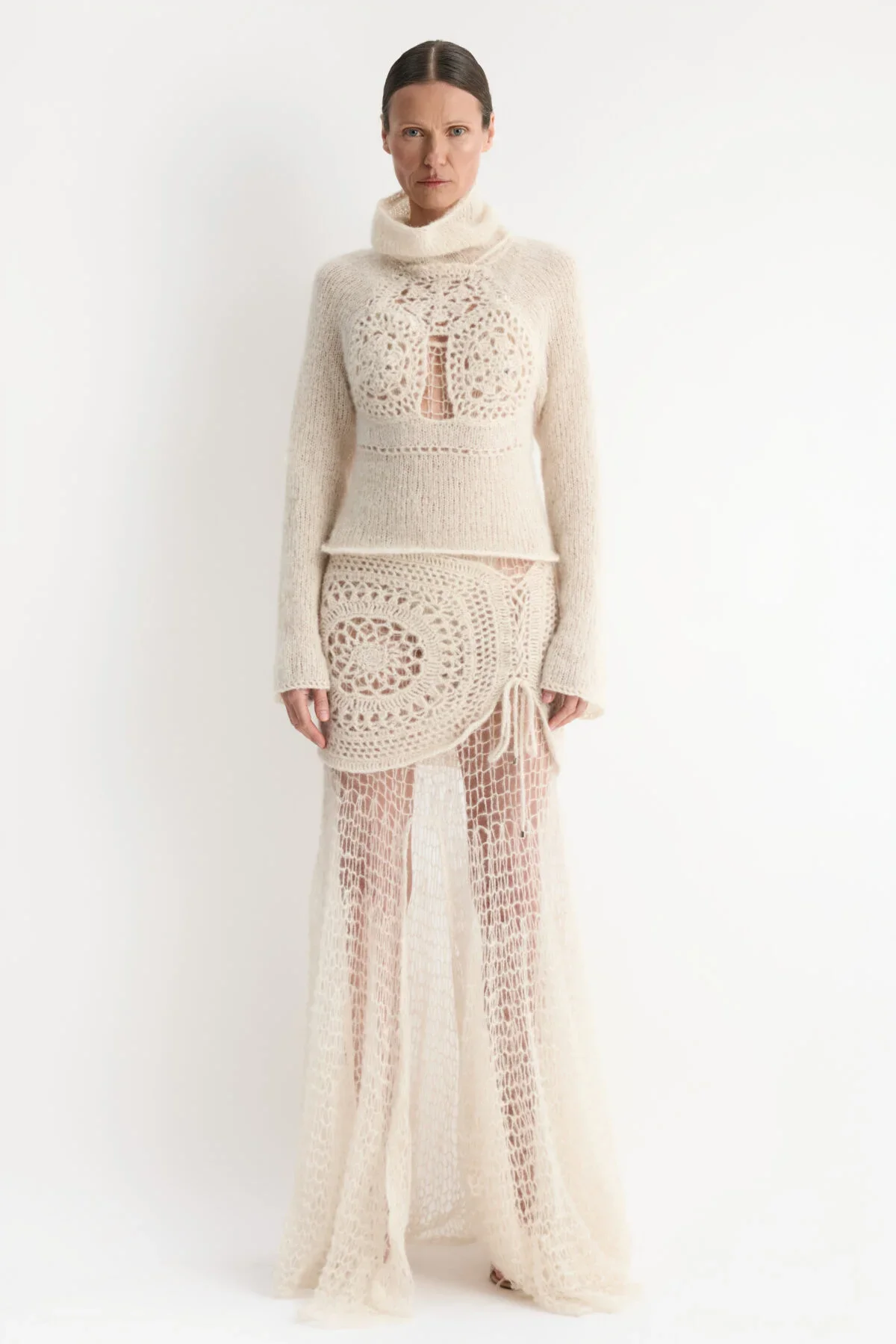
Credits: Karen Arcanjo
Roboty Ręczne
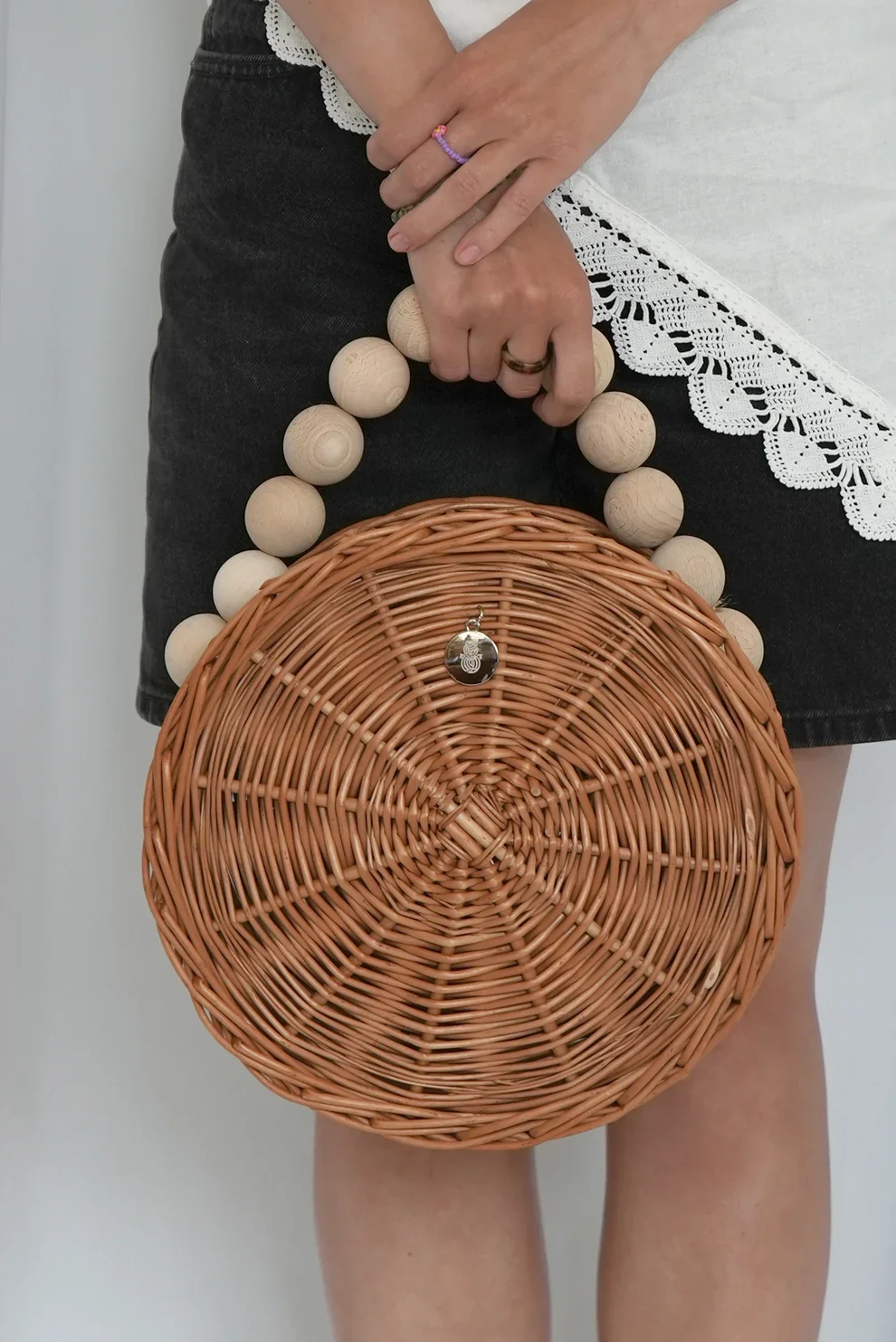
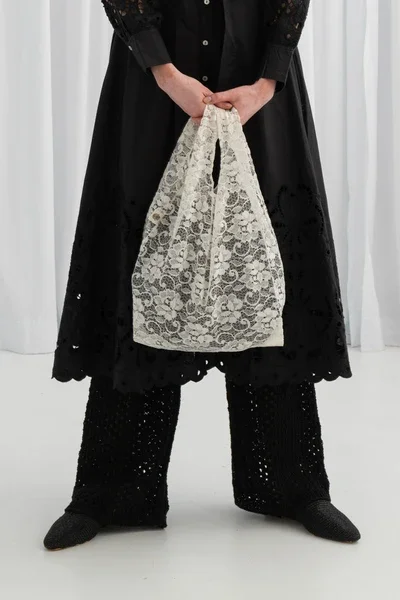
"Roboty Ręczne" translates simply as "handiwork," and the Warsaw label built by Marta Iwanina-Kochańska treats that name as a mission statement. A graduate of Warsaw's Academy of Fine Arts, Iwanina-Kochańska grew up watching her mother knit sweaters at home, a memory that became the founding gesture of the brand. Today, the family-run house works exclusively with local artisans to hand-knit sweaters, dresses, and scarves, and to hand-weave wicker baskets and leather bags, refusing anything resembling mass production. Clients wait weeks for pieces precisely because nothing is rushed. In an industry defined by fast turnarounds, Roboty Ręczne has made patience itself a kind of luxury, and a rebuke to fast fashion's disposability.

Credits: Roboty Ręczne
Celestina Mode
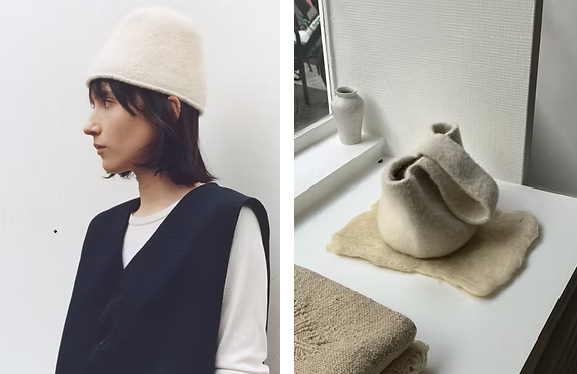
At the more intimate end of the spectrum sits Celestina Mode, a small knitwear studio in Warsaw founded by Marta Weronika Orlikowska and named for her partner's grandmother, who once ran a haberdashery in Rome. Orlikowska is, by her own account, the only person in the studio, knitting and felting every order herself. Her signature felted hats draw on the Albanian qeleshe, but she makes them using raw Polish wool sourced from the Beskidy mountains, beaten, pressed, and dried over several days until the fibres knot into shape. Each hat takes roughly four days to complete and is made entirely to order. It is craft at its most literal: one pair of hands, one region's wool, one finished object at a time.
Credits: Celestina Mode
MAKO
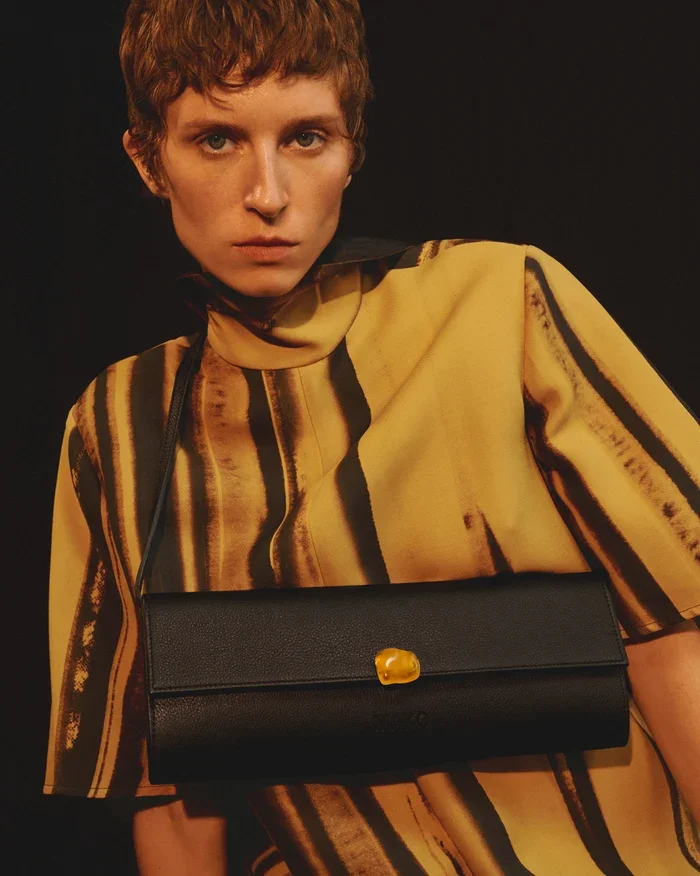
Poland is the world's largest exporter of amber, a legacy of the Baltic coast that MAKO founder Anna Sękowska carries close to home. Born and raised in Gdańsk, Sękowska grew up watching her grandfather cut amber in his workshop on the veranda of her grandparents' house in Oliwa, remembering how carefully he polished even the smallest stones. That inheritance passed to her younger sister, Małgosia, who personally prepared much of the amber for MAKO's "Our Precious" capsule collection. There, natural Baltic amber, cut and polished but left close to its raw form so that no two pieces are quite alike, is set against black leather across bags, shoes, and personalized charms, giving a classic Polish material a distinctly modern, minimalist edge.
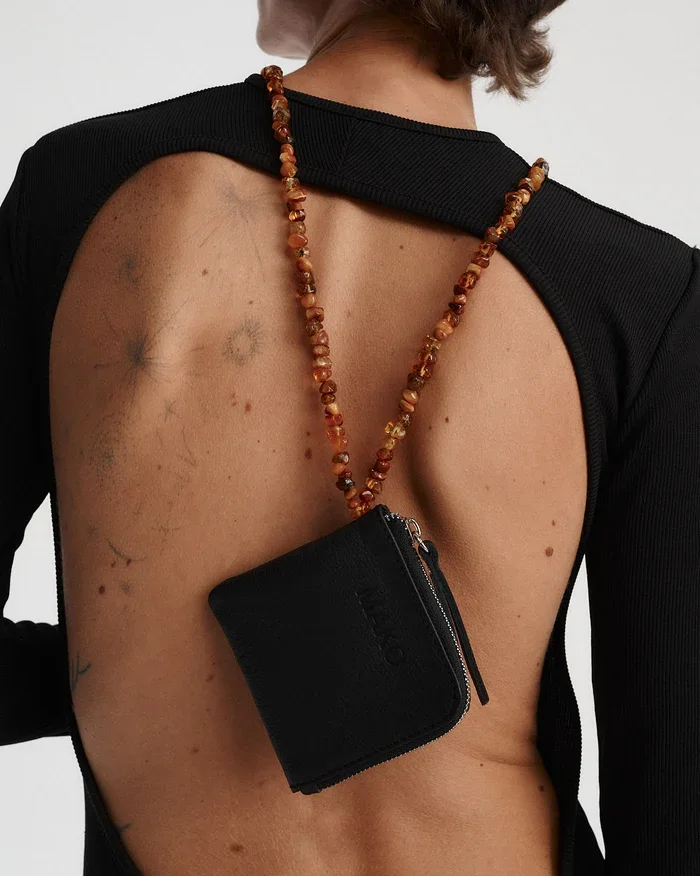
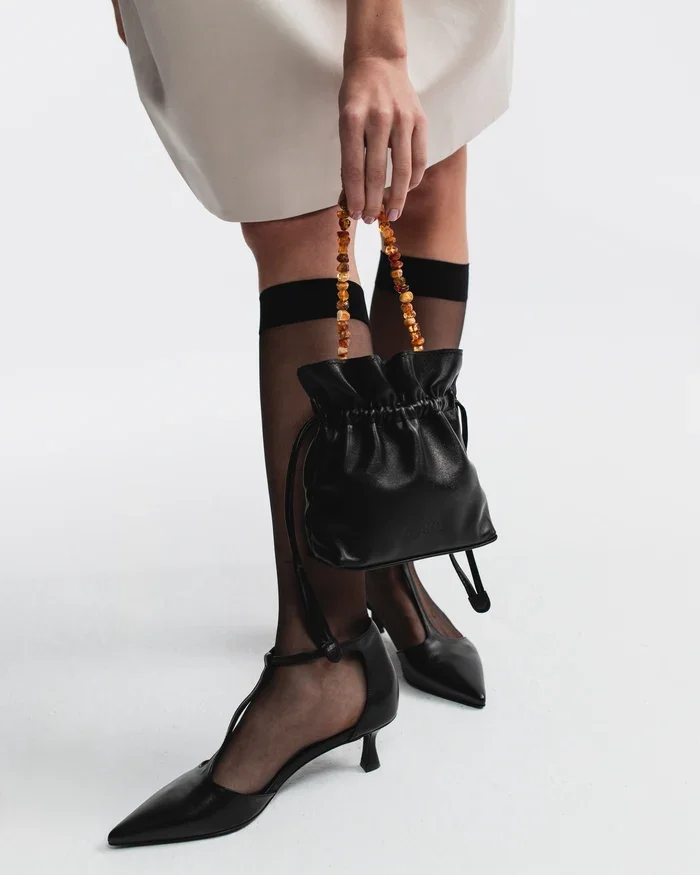
Credits: MAKO
Orska
Few materials are more quintessentially Polish than amber, and few designers treat it with as much conceptual ambition as Anna Orska. Her Sello collection, unveiled in 2024, takes its name from the Spanish word for seal, a nod to the mark nature pressed into amber some 40 million years ago. Made with gold, brass, and transparent Polish amber selected and cut in a family workshop on the Vistula Spit, it turns the stone into gilded, hammered circles, squares, and rectangles set against satin-finished metal. Where the amber is clear enough to see through, Orska has engraved it with plants and insects echoing the stone's ancient origins, alongside a starker set of symbols: nails, screws, and fragments of circuit boards traced into the resin, a meditation on what our own era might leave behind for whoever finds it next.
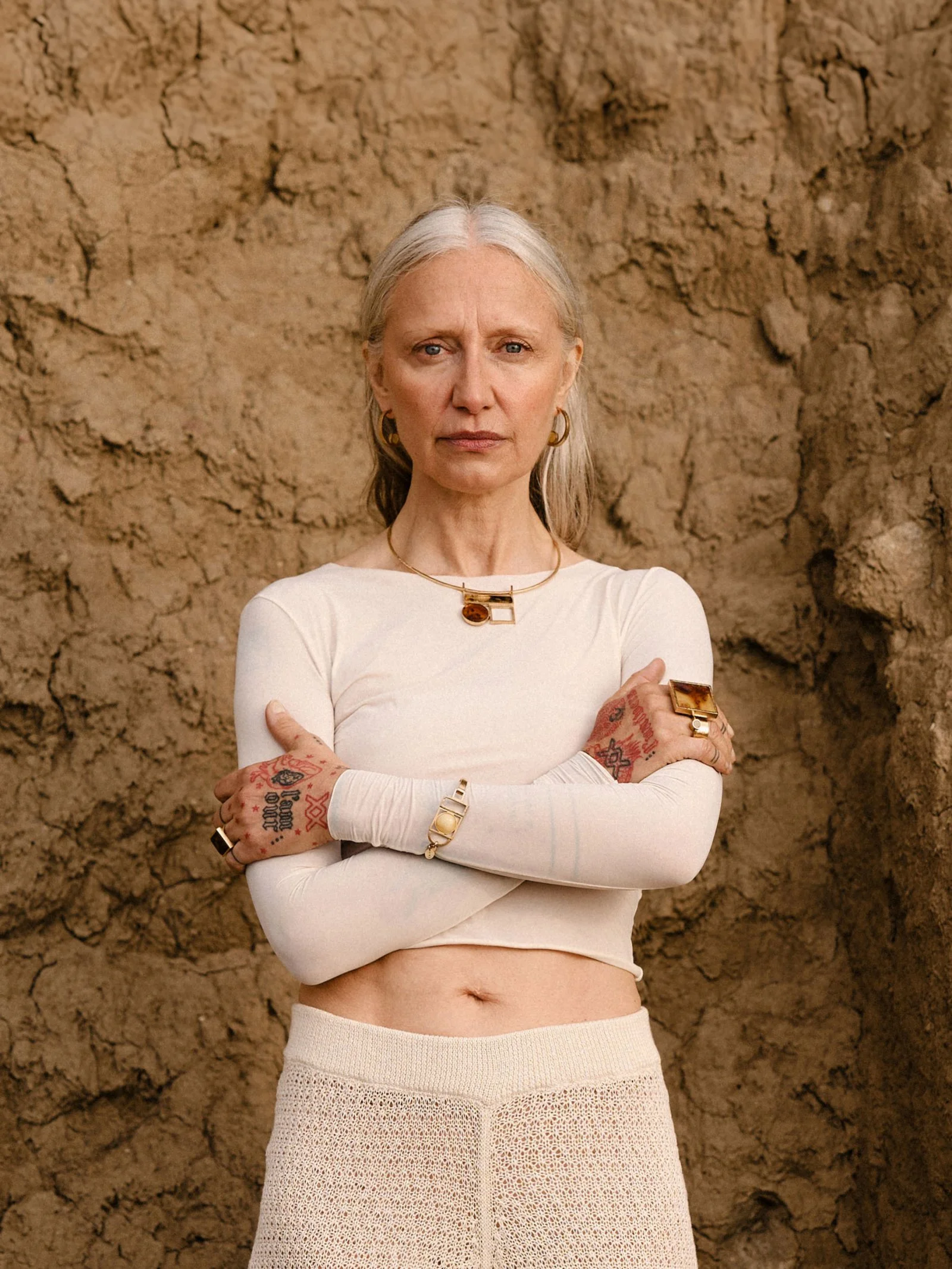
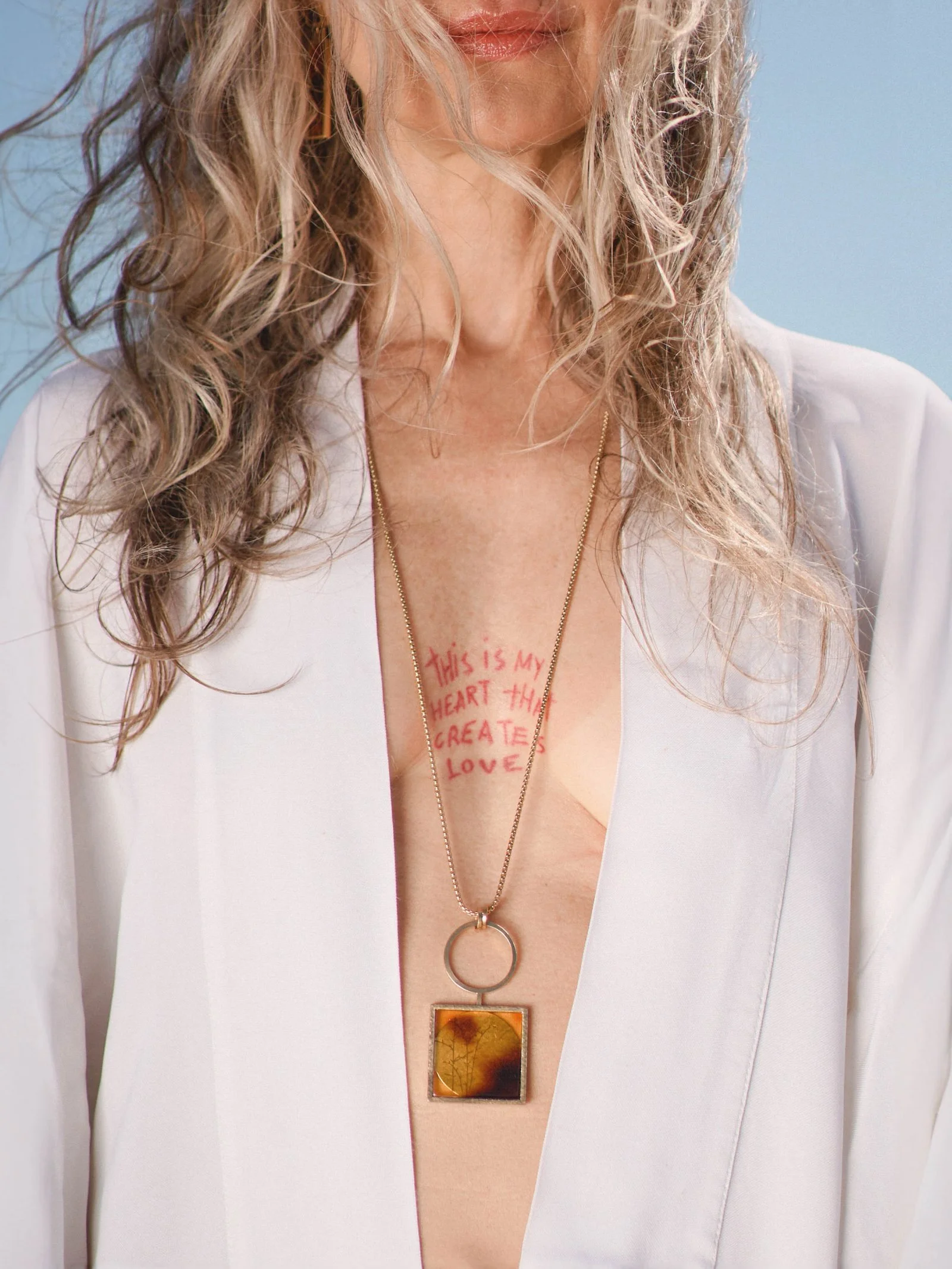
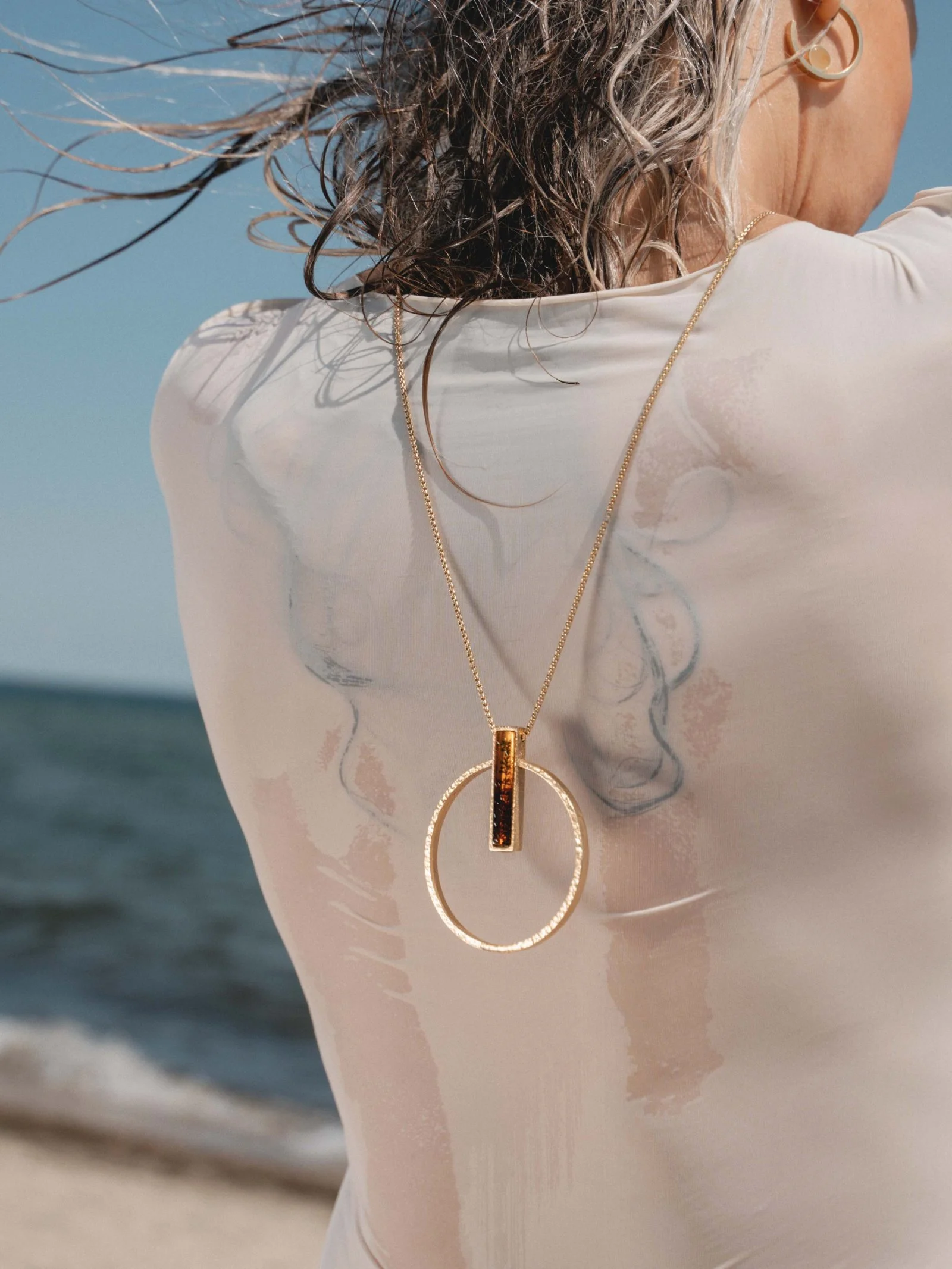
Credits: Orska
There is something genuinely moving about watching techniques once kept alive quietly, by grandmothers and aunts with no expectation of an audience beyond their own village, travel this far: onto runways in Paris, into amber-set clutches and gallery windows, into the wardrobes of people who may never have heard the word Koniaków before this year. It is a joy to see Polish craftsmanship flourishing and receiving renewed attention. This growing appreciation for local craftsmanship shows that tradition does not have to belong to the past; it can evolve, inspire, and remain relevant to a new generation.